B Probascore Editorial
Tactical Deep-Dive Updated June 2026

Without Ancelotti, Japan Wins This Match—Not Brazil!

How a tactical mastermind dismantled the ultimate Samurai Blue defensive fortress and finally forced a group of solo superstars to play as one.

P

Probascore Editorial

5 min read · Interactive board below
Brazil

Brazil

Winner (Ancelotti Era)

2 - 1
Full Time (FT)
Japan

Japan

Tactical Block Shape

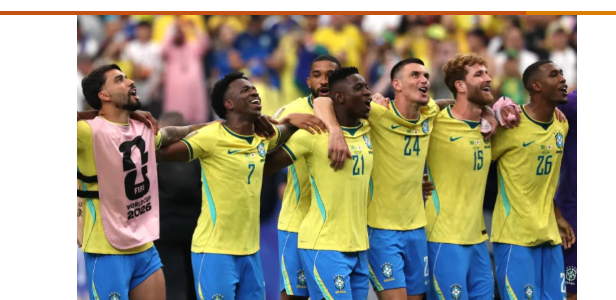
Brazil national team players including Vinícius Júnior and Rodrygo standing together in yellow kits at FIFA World Cup 2026
Brazil’s squad lines up united — the collective shift Ancelotti demanded after a frustrating first half.

When the final whistle blew, the scoreboard confirmed a Brazilian victory. But if you watched the first 45 minutes, you might have thought a massive upset was brewing.

For years, the narrative surrounding the Brazilian national team has been the same: an abundance of world-class individual talent, but a complete lack of a unified, collective system. Enter Carlo Ancelotti.

Without Ancelotti at the helm to force patience over solo flair, this match would have ended in a historic Japanese victory. Let's look at how he pulled off the tactical transformation.
Interactive Board

Halftime Shift Simulation

Interact with the controls below to see how Ancelotti countered Japan's defensive block in the second half.

Brazil Attacking
Japan Defending

Tactical Parameters

Show Passing Lanes

Live Analysis

Select controls to trigger simulated analytical overlays.

The Samurai Blue Wall: Why Japan is a Defensive Nightmare

If there is one thing world football has learned over the last few years, it’s this: you do not underestimate Japan's tactical discipline. In the first half, Japan didn't just park the bus; they engineered a highly functional, dynamic defensive fortress.

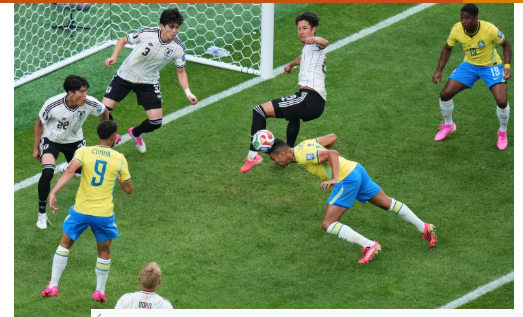
Brazil attacker attempts a diving header against Japan defenders inside the penalty area
Japan collapsed on every aerial duel in the box — Brazil needed patience, not solo runs, to break the block.

Micro-Distances between Lines

Japan defends as a single, breathing organism. The space between their lines was rarely more than 10 meters, completely suffocating Brazilian space.

Triggered Pressing

Instead of chasing backlines, Japan waited for the ball to enter wide channels to trigger rapid trap presses with numerical superiority.

The Ancelotti Masterstroke: Overcoming the Ego

In the past, a frustrating first half would lead to Brazil devolving into "hero ball." Players would abandon the game plan, trying to dribble past three defenders to score a highlight-reel goal. Not anymore.

Ancelotti realized that beating a highly disciplined team like Japan requires patience, not individual flair. He introduced rapid ball circulation (strict one- and two-touch passing) to force the Japanese block to shift side-to-side faster than they could physically maintain.

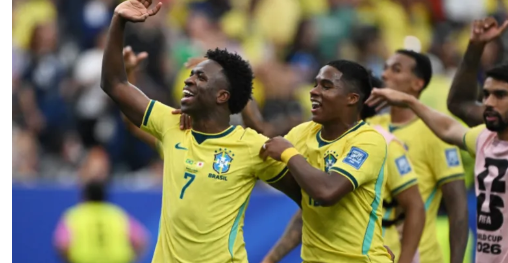
Vinícius Júnior and Endrick celebrate together in Brazil yellow kits after scoring against Japan
Vinícius Júnior and Endrick — the payoff when Brazil stopped playing as individuals and started playing as one.

Where Did Japan Go in the Second Half?

By forcing Japan into an endless cycle of chasing quick-passing sequences, Brazil completely drained Japan's stamina. The aggressive physical shift by Brazil's wingbacks high on the pitch dragged Japan's wingbacks into direct, fatigue-heavy defensive roles. By the 60th minute, Japan's tactical structure began to crack, allowing Brazil's dynamic attack to easily secure both the equalizer and the dramatic 96th-minute winner.

Quick Answers — Brazil vs Japan Tactical FAQ

Who won Brazil vs Japan?
Brazil won 2-1. Japan controlled the first half with a compact low block; Ancelotti's halftime shift turned possession into vertical penetration and late winner.
What did Ancelotti change at halftime?
Higher wingbacks, faster circulation, fewer solo runs — forcing Japan to chase the ball side-to-side until the block fatigued and opened lanes for Vinícius and Endrick.
Why is Japan's defence so effective?
Micro-distances between lines, triggered wide-channel presses, and collective shape — the Samurai Blue rarely leave more than ~10 metres between defensive lines.

More predictions and analysis on Probascore.